
Shipbuilding Structure
Hulls, decks, bulkheads and offshore platforms.

Overview
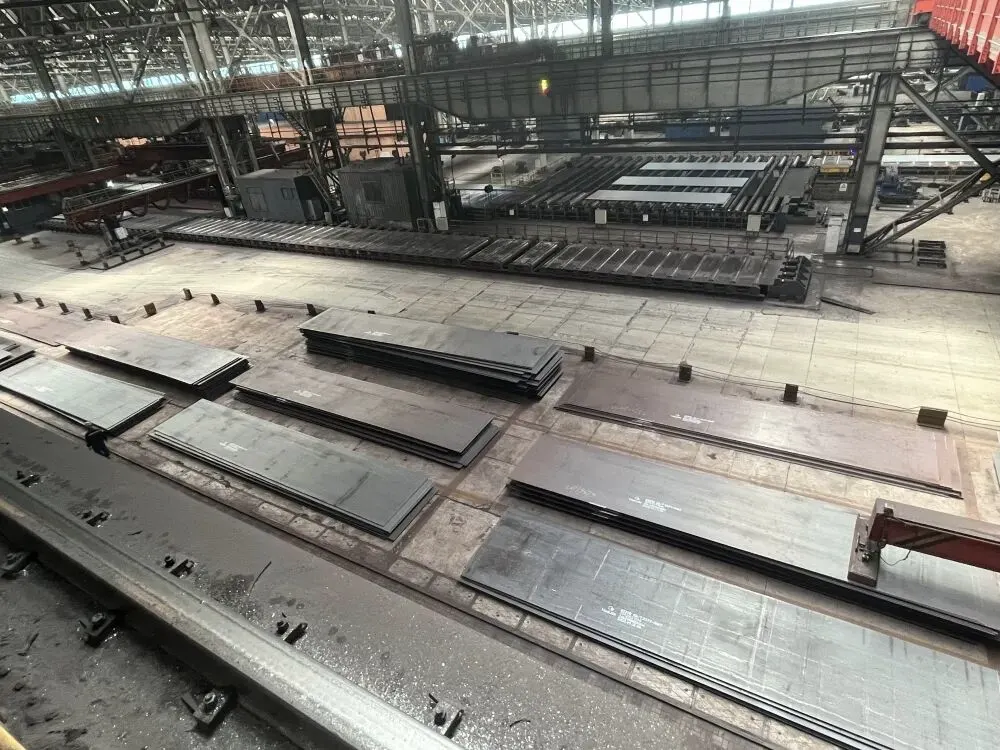
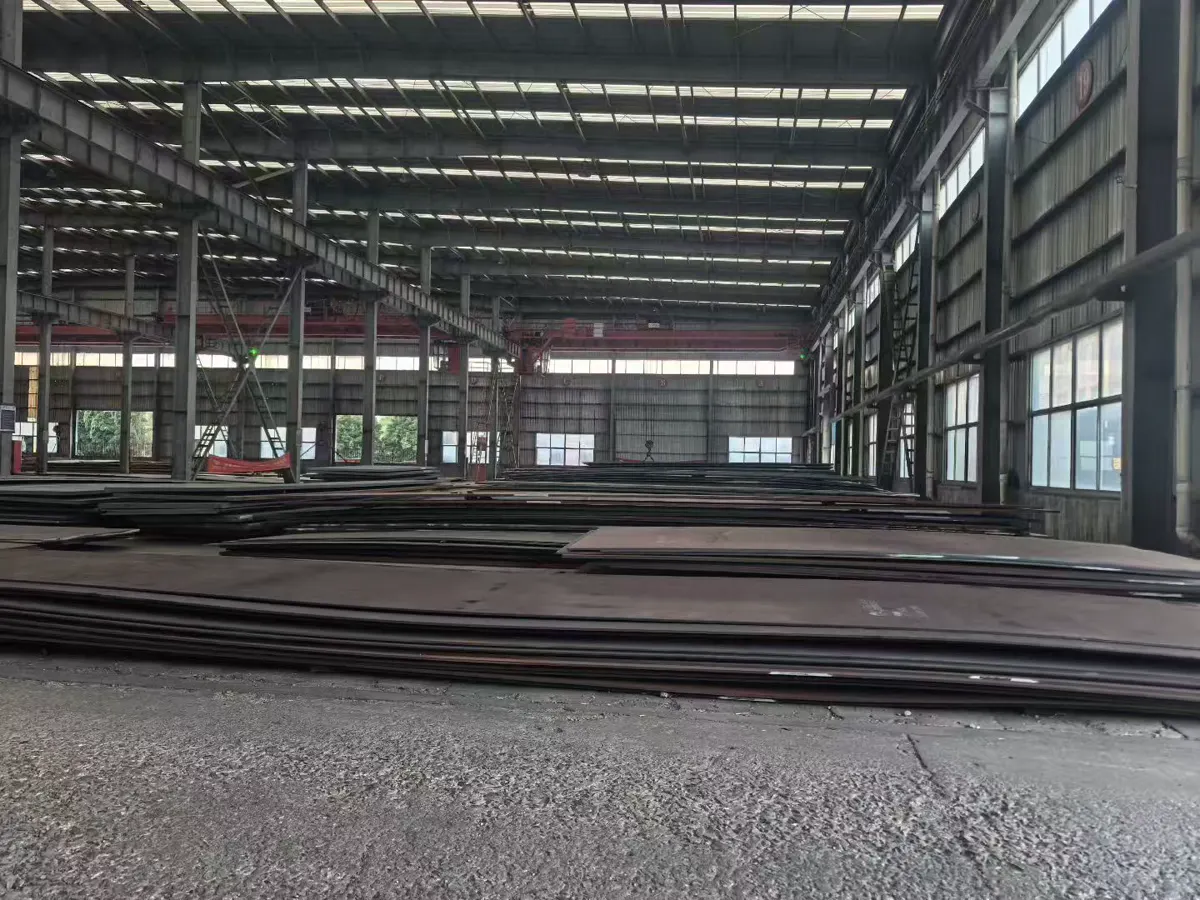
Hulls, decks and bulkheads are built from plate produced to classification-society rules. Ordinary-strength grades A, B, D and E and higher-strength grades such as AH36, DH36 and EH36 are chosen according to the location in the ship and its service temperature.
Class approval is part of the product, not just paperwork. If a survey is required, the classification society and its certificate need to be stated in the order before the plate is produced.
Where each steel product is used
| Structure | Steel product | Typical grades / standards |
|---|---|---|
| Hull, deck and bulkhead plate | Shipbuilding plate | A / B / D / E, AH36 / DH36 / EH36 |
| Offshore platforms and port cranes | Medium and heavy plate | S355 / Q355D |
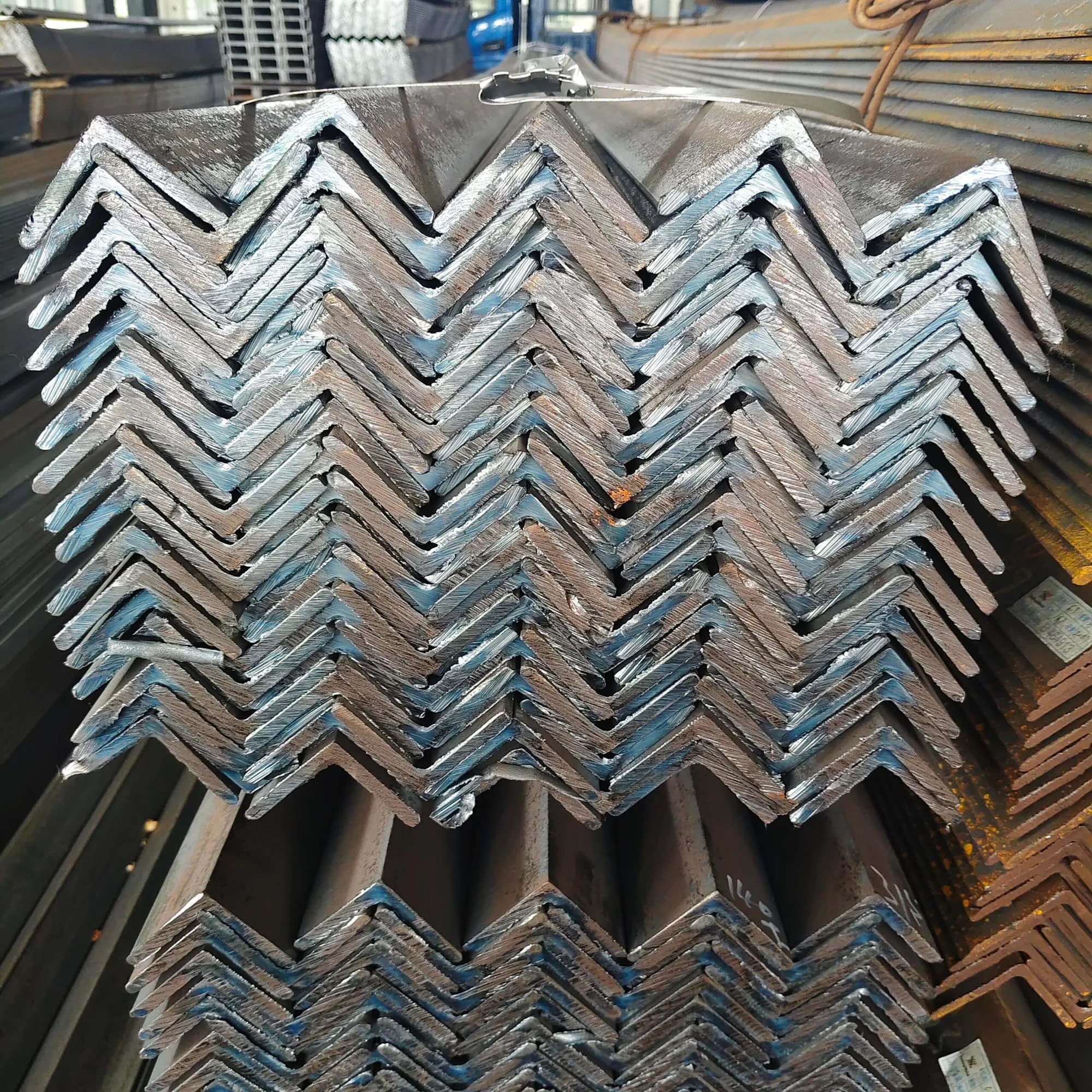
| Frames and stiffeners | Angle | A / AH36 |
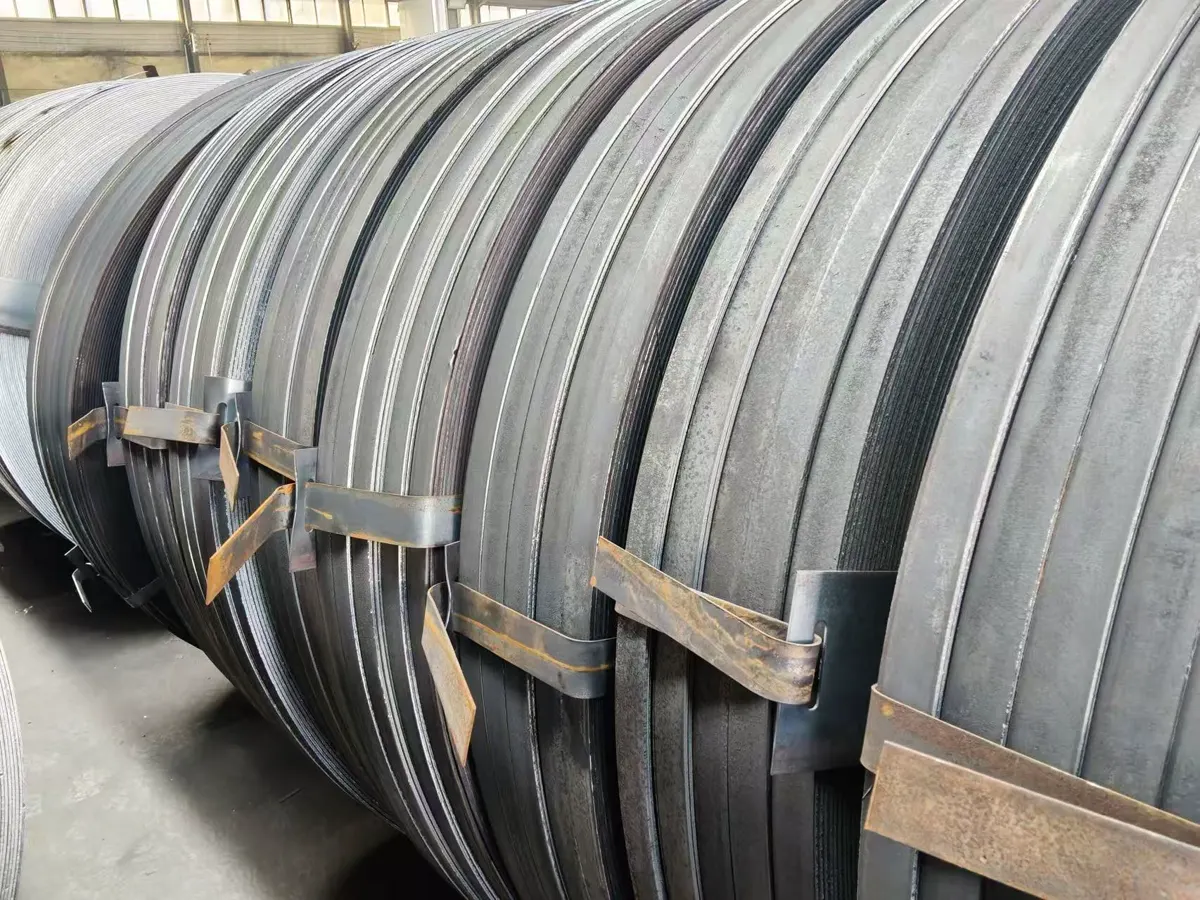
| Local stiffeners and brackets | Flat bar | A / AH36 |
Grades shown are typical examples. The project's design documents and applicable codes decide the final specification.
Common standards: CCS, ABS, DNV, LR class rules
What the project needs
- Plate to CCS, ABS and other class rules
- Good weldability and seawater corrosion resistance
- Precise thickness tolerance
What to consider when selecting steel
Classification certificate
Name the class society, such as CCS, ABS, DNV or LR, when you ask for a quote. A certificate usually cannot be added once the steel has been made.
Grade by location
The letter of the grade reflects its impact-test level, so critical areas and cold-water service can call for D or E quality.
Thickness tolerance and surface
Hull plate has limited under-thickness allowance under class rules. Shot-blasted and primed plate can be requested to suit the yard's workflow.
Recommended products
What to include in your inquiry
- Plate list with grade, thickness, width and length
- Classification society and certificate type
- Surface condition: mill finish, shot-blasted or primed
- Port and laydown limits for long plates
Frequently asked questions
What is the difference between AH36 and DH36?
Both have the same strength level. DH36 is impact-tested at a lower temperature than AH36, which makes it suitable for more demanding locations.
Can ordinary S355 replace ship plate?
Not for classed hull structure unless the class society and designer accept it. Class-approved plate is normally required.
Can sections be supplied with class certificates?
This needs to be confirmed for each size and grade at the inquiry stage, because availability depends on the mill and class approval.