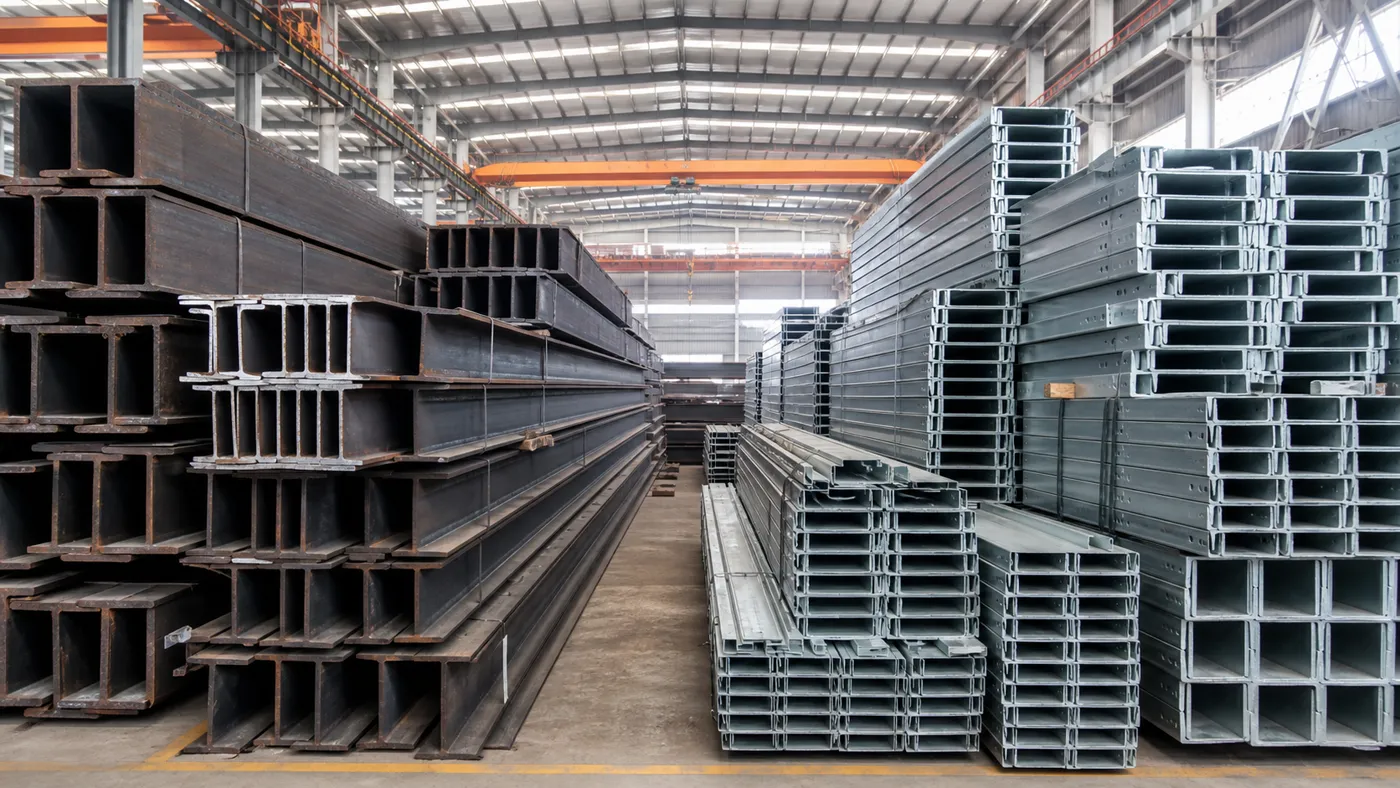
H-Beam vs I-Beam: Differences, Uses and How to Specify
By Shanghai Banzhijia Steel · · 3 min read
H-beam and I-beam are often used as if they mean the same thing. In Chinese standards and many export inquiries, they are different products with different shapes, sizes and standards. Ordering the wrong one can affect connections, fabrication and your design check.
This guide explains the differences and how to write each section correctly in an inquiry.
H-Beam vs I-Beam at a Glance
Feature
H-beam
I-beam
Flanges
Parallel inner and outer faces
Tapered inner faces
Flange thickness
Uniform
Thicker near the web
Typical Chinese standard
GB/T 11263
GB/T 706
Typical names
HW, HM, HN series
I20a, I25b and similar
Bolted connections
Flat flange faces simplify connections
Tapered faces may need bevel washers
Common uses
Columns, frames and main beams
Lighter beams, supports and tunnel arches
The Main Difference Is the Flange
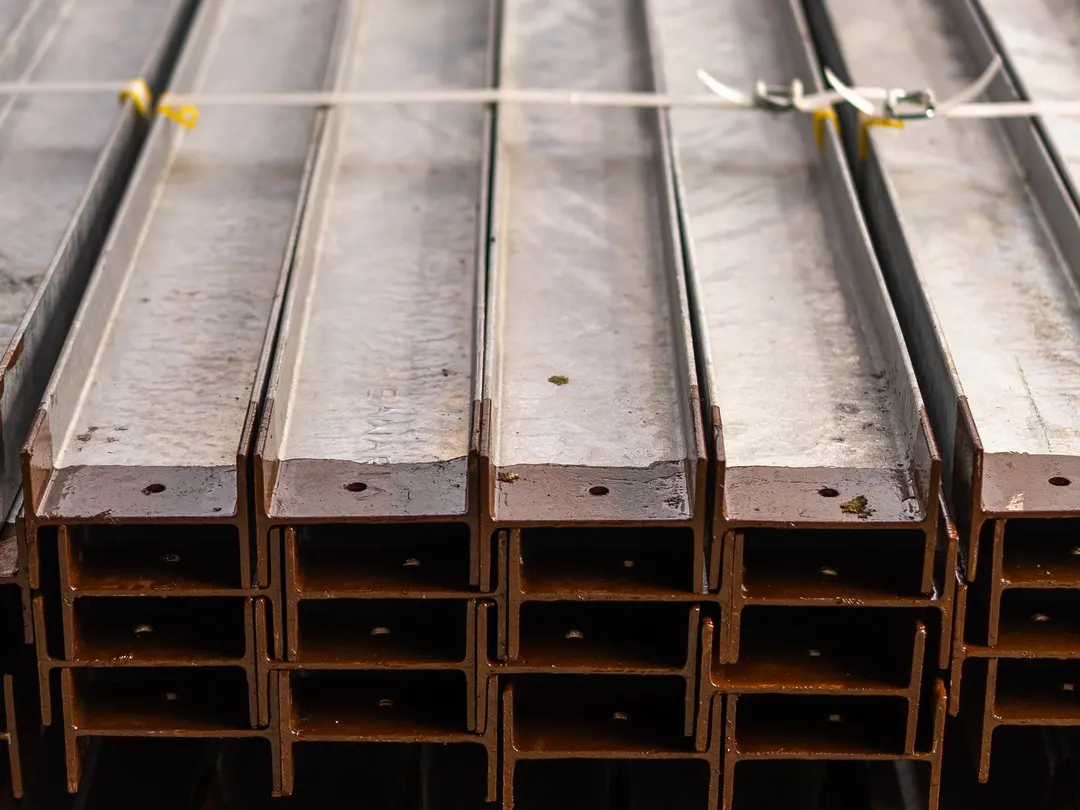
An H-beam has flanges with parallel faces and a uniform thickness. An I-beam has flanges that taper, so they are thicker near the web and thinner at the edge. This single difference affects how the section carries load in different directions and how easily you can connect to it.
When to Use an H-Beam
Columns and frames: wide flange sections have good stiffness about both axes, which helps members under compression.
Large span and heavy structures: the HW, HM and HN series give designers a wide choice of proportions.
Bolted and welded connections: parallel flange faces make connections simpler to detail and fabricate.
When to Use an I-Beam
Beams loaded mainly in one direction: the section works most efficiently about its strong axis.
Tunnel arches: I-beams are commonly bent to shape for initial support. See our tunnel structure page.
Existing designs and repairs: keep the original section unless the engineer approves a change.
Can You Substitute One for the Other?
Not automatically. Two sections with the same nominal depth can have different section properties, weight, flange width and connection details. Any change should go back to the structural engineer, who can check strength, stability and connections.
How to Read H-Beam and I-Beam Sizes
H-beam: HN300×150×6.5×9 gives series, height, flange width, web thickness and flange thickness in millimetres.
I-beam: I20a gives a nominal height of about 200 mm. The letter separates sections of the same height with different proportions.
Other markets: names such as W, UB, UC, HEA, HEB and IPE belong to other standards. They are similar in concept but not automatically interchangeable.
What to Include in Your Inquiry
Hot-rolled H-beam, GB/T 11263, HN300×150×6.5×9, Q355B, 12 m, 100 tons, mill test certificate, CIF [destination port].
Section type, size and standard
Grade, such as Q235B, Q355B, S355JR or A572 Gr.50
Length and tonnage by size
Any cutting, drilling, painting or galvanizing
Certificate and inspection requirements
Frequently Asked Questions
Is an H-beam stronger than an I-beam?
It depends on the sections compared and how they are loaded. Compare the actual section properties for the same use, not just the shape name.
What does "wide flange beam" mean?
It generally refers to a section with parallel flanges, like an H-beam. Exact sizes depend on the standard, so name the standard in your order.
Can H-beams be welded instead of hot rolled?
Yes. Welded sections are built up from plate and can make sizes outside rolled ranges. Say clearly which type you need.
Hot-dip galvanized U channel steel is widely used where a structural section needs to carry load, provide a mounting edge, or protect equipment while remaining exposed to moisture and weather. It appears in solar…
Hot-dip galvanized U channel is widely used in outdoor support frames, solar mounting systems, equipment bases, cable-support structures, agricultural facilities, and general steel fabrication. The reason is fairly…
Everything that separates hot rolled steel from cold formed steel traces back to one number: roughly 925°C (1,700°F), the recrystallization temperature of steel. Roll it above that line and the material stays soft and wo